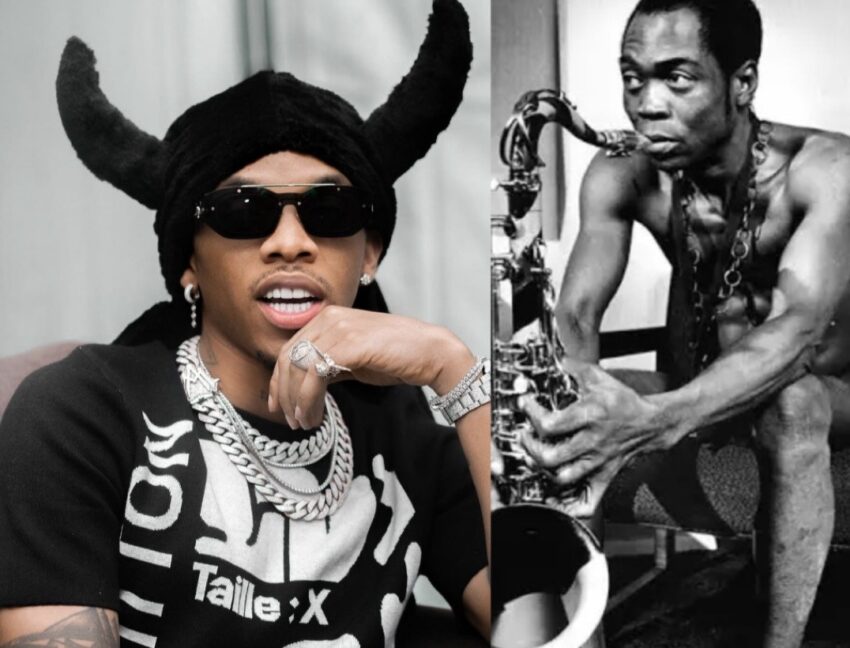
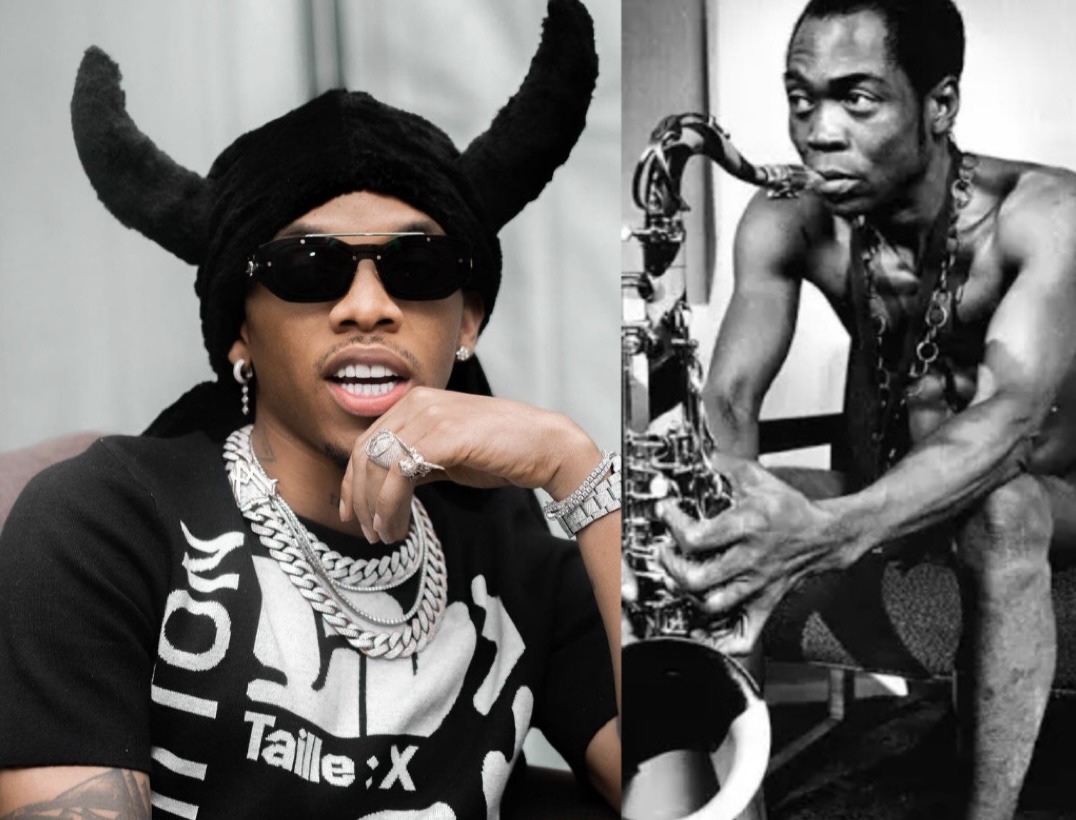
Nigerian singer Tekno has sparked a fresh debate about the history and origins of Afrobeats after questioning the widely held belief that late music legend Fela Anikulapo-Kuti should receive sole credit for creating the sound.
Tekno made the comments during a recent interview with Hot 97 FM in New York, where he discussed Fela’s influence on Nigerian music and the contributions of other musicians whose work, he argued, deserves greater recognition.
The comments quickly generated discussion among Nigerian music fans, with reactions divided between those who agreed with Tekno’s broader view of Nigerian music history and those who argued that his comments blurred the important distinction between Afrobeat and Afrobeats.
At the centre of the conversation is a simple but complicated question:
Who should receive credit for the origins of the sound that has become one of Africa’s biggest global musical exports?
What Did Tekno Say About Fela?
During the Hot 97 interview, Tekno acknowledged Fela’s enormous influence but questioned whether the Nigerian icon should be described as the sole originator of Afrobeats.
He pointed to musicians from earlier generations whose contributions, he believes, have not received enough attention.
One of the names he specifically mentioned was Oliver De Coque, the legendary Nigerian highlife musician.
Tekno explained that he grew up listening to highlife music and that his father played records by musicians such as De Coque.
He also connected his own musical education to the older Nigerian sounds that existed before contemporary Afrobeats became a global phenomenon.
Tekno’s argument was not that Fela had no influence.
Instead, he suggested that the story is much broader than one individual.
Tekno Still Recognises Fela’s Global Impact
While his comments have been widely interpreted as challenging Fela’s status, Tekno also acknowledged the late musician’s enormous contribution to African music.
The singer credited Fela with helping put the sound on the international map.
According to reports of the interview, Tekno argued that Fela’s extensive international touring and performances with his band helped him gain a level of global recognition that many other Nigerian musicians did not receive.
That distinction is important.
Tekno’s argument is essentially that Fela’s international visibility should not automatically mean that other musical pioneers are forgotten.
For him, Nigerian music history contains many important figures whose work contributed to the sounds that eventually influenced modern Afrobeats.
Why Oliver De Coque Was Mentioned
Oliver De Coque’s name has become one of the biggest talking points from Tekno’s comments.
The late musician was one of Nigeria’s most prominent highlife guitarists and performers, particularly associated with Eastern Nigerian musical traditions.
Tekno used De Coque as an example of an artist whose contribution deserves greater recognition.
His argument reflects a broader conversation about the different musical traditions that existed across Nigeria before Afrobeats became a dominant global term.
Highlife, juju, funk, jazz and other African and Western influences all played roles in the development of Nigerian popular music.
The debate is therefore not simply about Fela versus Oliver De Coque.
It is about how a country’s musical history is remembered and which artists receive the most attention.
The Afrobeat vs Afrobeats Debate
One of the most important parts of the controversy is the difference between Afrobeat and Afrobeats.
The terms are often used interchangeably in everyday conversation, but they can refer to different things.
Afrobeat, commonly associated with Fela Kuti, refers to the distinctive musical style developed by Fela and his collaborators, combining elements of West African music with jazz, funk and other influences.
Afrobeats, meanwhile, is a broader contemporary term commonly used to describe a range of African popular music styles that emerged decades later and became internationally popular through artists such as Wizkid, Davido, Burna Boy, Tiwa Savage and many others.
This distinction has become a major part of the reaction to Tekno’s comments.
Some critics argued that highlife should not simply be classified as Afrobeat or Afrobeats because it is a distinct musical tradition.
Others believe that contemporary Afrobeats developed through the blending and evolution of many African musical styles.
Nigerians React to Tekno’s Comments
The discussion quickly spread across social media.
Some Nigerians supported Tekno’s position, arguing that Nigerian music history should include more artists from different regions and musical traditions.
Supporters pointed to musicians such as Oliver De Coque, Osita Osadebe, Sunny Ade and other pioneers whose contributions remain less prominent internationally.
Some argued that Fela was a major catalyst in the development and globalisation of Afrobeat but should not be treated as the only important figure in Nigeria’s musical history.
Others strongly disagreed.
Critics said Tekno was mixing up different genres and argued that highlife should remain clearly distinguished from Fela’s Afrobeat.
Some also insisted that Fela’s contribution was not simply a matter of international popularity but involved the creation and development of a distinctive musical form.
The disagreement has therefore become as much about music terminology as it is about individual artists.
Why Fela Remains Central to the Conversation
Regardless of where someone stands on Tekno’s comments, Fela’s place in African music history is difficult to separate from the story of Afrobeat.
His music, political activism and international performances helped make him one of Africa’s most recognisable musicians.
His influence continues to be heard in contemporary Nigerian music, while his catalogue remains relevant to younger generations of African artists.
Tekno himself acknowledged that influence.
He reportedly pointed to his own song “Rara” as a record heavily inspired by Fela after hearing the legend’s music.
That admission makes the debate more nuanced.
Tekno is not dismissing Fela’s importance.
He is questioning whether Fela should be presented as the only figure responsible for the development of the sound.
The Case for Nigeria’s Other Music Pioneers
One reason Tekno’s comments have resonated with some listeners is that Nigerian music history is extremely broad.
Before Afrobeats became a global commercial force, Nigeria already had thriving musical traditions.
Highlife became particularly influential in Eastern Nigeria, while juju developed strongly in the southwest.
Artists across different regions created distinctive sounds, built bands and developed musical styles that influenced generations of performers.
Some of those musicians became internationally famous.
Others remained better known within Nigeria and neighbouring African countries.
Tekno’s argument is that the global Afrobeats narrative should not erase those earlier contributions.
For supporters, recognising Fela’s achievements and recognising other pioneers can happen at the same time.
Did Tekno Say Fela Did Nothing for Afrobeats?
No.
This is one of the most important points to clarify.
The reports of Tekno’s interview show that he acknowledged Fela’s influence and global impact.
His criticism was directed at the idea that Fela should receive sole credit for the origins of the broader sound.
He specifically credited Fela with helping put Afrobeat on the world map through international exposure and touring.
Therefore, headlines suggesting that Tekno completely dismissed Fela’s contribution would be misleading.
The real argument is about how much credit Fela should receive compared with other pioneers.
Why the Debate Matters Today
At first glance, the disagreement may look like another celebrity controversy.
But the conversation has a deeper significance.
Afrobeats has become one of Africa’s most successful cultural exports.
Nigerian artists now headline international festivals, sell out major arenas and collaborate with some of the biggest names in global music.
As the genre becomes more commercially important, questions about its history and origins are likely to become more common.
Who created what?
Which musical traditions influenced the sound?
Which artists were overlooked?
And how should the history of Nigerian popular music be taught to younger generations?
These are legitimate questions, even when people disagree about the answers.
Tekno’s Own Career Adds Another Layer
Tekno is not an outsider commenting on Nigerian music.
He has been one of the important figures in the modern Afrobeats movement.
Songs such as “Pana,” “Duro” and “Rara” helped establish him as one of Nigeria’s major contemporary music stars.
His career has therefore been shaped by the evolution of the same musical ecosystem being discussed.
His comments are particularly interesting because they come from an artist who has benefited from the global expansion of Afrobeats while also growing up around older Nigerian musical traditions.
His perspective brings together two generations of Nigerian music.
A Debate Bigger Than Tekno and Fela
Ultimately, the argument is bigger than Tekno.
It is also bigger than Fela.
The debate is about how Nigerian music evolved from multiple traditions into the globally recognised sounds audiences hear today.
Fela’s Afrobeat is an essential part of that story.
So are highlife, juju, palm-wine music, funk, jazz and numerous other influences.
The contemporary Afrobeats movement itself is incredibly diverse.
Artists can draw from different Nigerian regions, African countries, Western pop, hip-hop, R&B, dancehall and electronic music.
That diversity is part of what makes the genre difficult to define with a single origin story.
What Fans Are Saying
The reaction online has been sharply divided.
Some fans believe Tekno has opened an important conversation about forgotten Nigerian music legends.
Others believe he has created unnecessary confusion by describing highlife and Afrobeat as though they are the same genre.
There is also a middle position.
Some listeners agree that other pioneers deserve more recognition but believe Fela’s specific contribution to Afrobeat should remain clearly defined.
That may ultimately be the most productive way to approach the discussion.
Recognising other musicians does not require reducing Fela’s contribution.
And celebrating Fela does not require forgetting the musicians who came before, alongside or after him.
What Happens Next?
The debate is likely to continue as more musicians, historians and music fans weigh in.
Tekno’s comments have already generated enough discussion to bring older Nigerian music back into the spotlight.
That alone could be a positive outcome.
Younger listeners searching for Fela, Oliver De Coque and other pioneers may discover music they had never heard before.
At the same time, the conversation could encourage more careful discussion about the difference between Afrobeat and Afrobeats.
Rather than simply asking who “invented” Afrobeats, the bigger question may be how the many strands of Nigerian music eventually influenced the sound that became a worldwide phenomenon.
Final Thoughts
Tekno has reignited one of the most interesting conversations in Nigerian music: who deserves credit for the origins of Afrobeats?
His comments questioned the idea that Fela Kuti should receive sole credit while highlighting musicians such as Oliver De Coque and the wider contribution of Nigerian musical traditions.
But Tekno’s comments also acknowledged Fela’s enormous influence and his role in taking Afrobeat to international audiences.
That is why the debate is more complicated than simply choosing between Tekno and Fela.
Fela’s legacy remains enormous.
At the same time, Nigerian music history contains generations of musicians whose work deserves attention.
Perhaps the biggest lesson from the debate is that Afrobeats did not emerge from a musical vacuum.
It is part of a long Nigerian and African musical journey — one that includes Fela Kuti, Oliver De Coque and many other artists whose sounds helped shape the music the world listens to today.
And as Afrobeats continues its global rise, the conversation about where it came from is unlikely to disappear anytime soon.